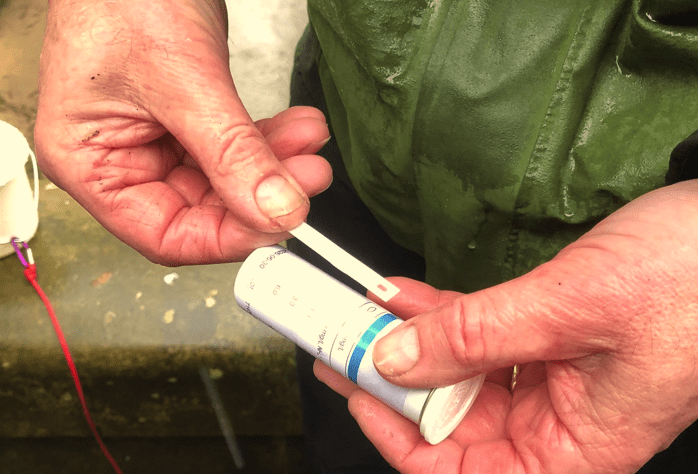
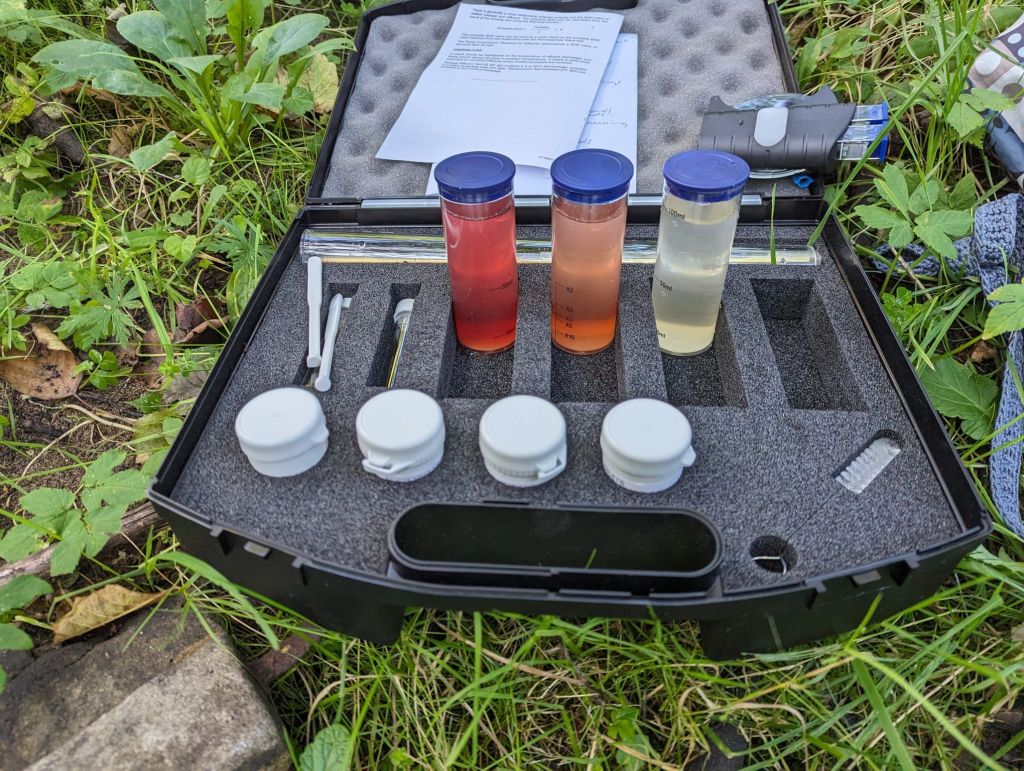
This March (2025), CRAG undertook a roadtrip through Warkworth, Felton and Rothbury. For the past year CRAG volunteers have been focusing their efforts on collecting water quality test results (indicating numerous variables, including ; pH, nitrates, ammonia, and oxygen levels), and we were finally able to feedback the results of all this hard work back to the communities.
At each meeting CRAG volunteers, along with other interested parties, were presented with the data they had worked so hard to gather and engaged with experts in the interpretation and discussion of the results. Check out these presentations on our results page. All that hard work collecting water quality test results- what does it mean?
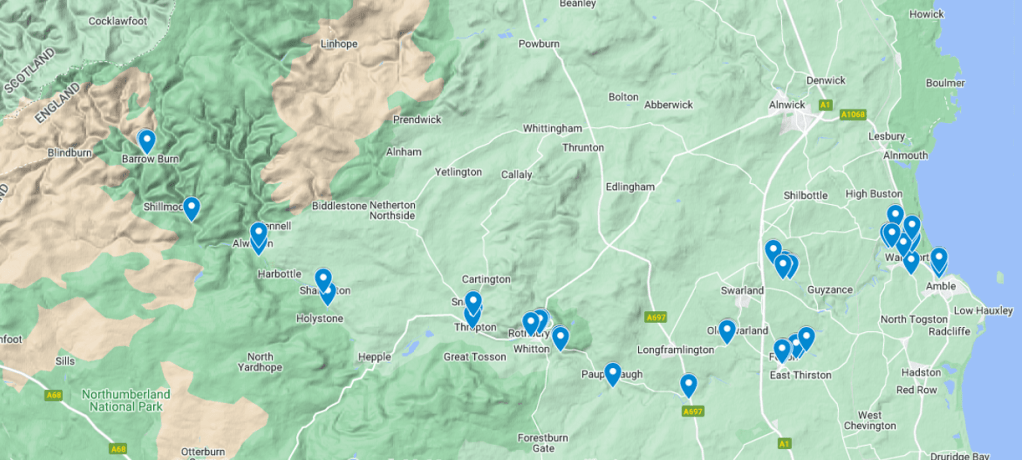
At Warkworth and Amble, there was great interest in the variability of the electroconductivity readings upstream of the half tide weir, although not in the estuary downstream of the weir. The weir is occasionally trapping salty water in the estuary around Warkworth.
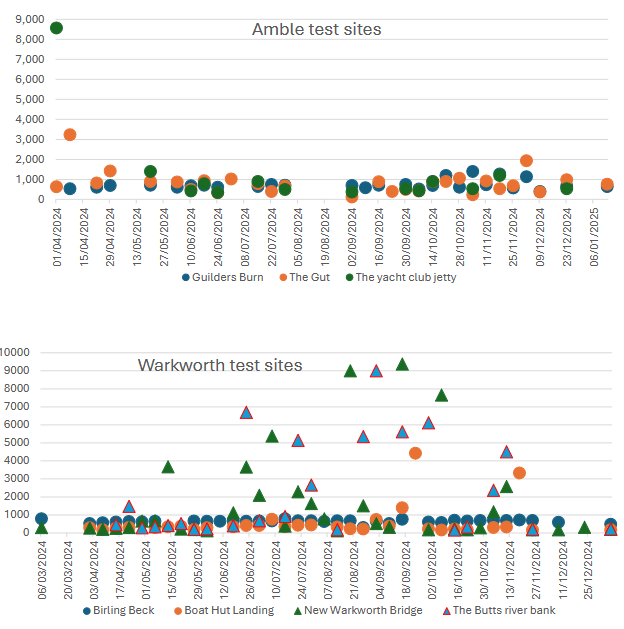
There was also concern about the high phosphate and nitrate readings in Guilders burn and Birling beck, both of which drain agricultural land.
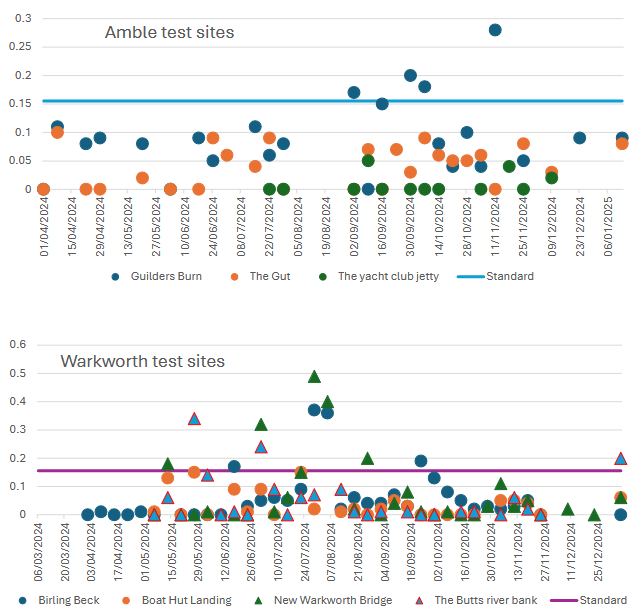

But perhaps the most debate concerned some of the sewage spills that have occurred into the estuary and off-shore from Amble. Discussions led to speculation about what the CRAG E. coli testing in summer 2025 might show, and how this might contribute to our knowledge. Especially as the Amble Harbour Commission, the Swimblers and the CRAG Little Shores group put in an application for Designated Bathing Water Status for Little Shore in 2025.
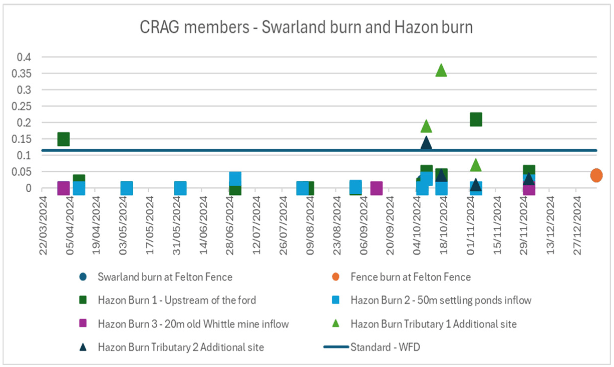
The meeting at Felton covered a large number of community groups working nearby. There were people from Guyzance to Brinkburn. The data discussed at this meeting included the main river, but also some of the main tributaries in this region including the Thirston & Longdike & Paxtondene burns, the Hazon burn and the Swarland burn.
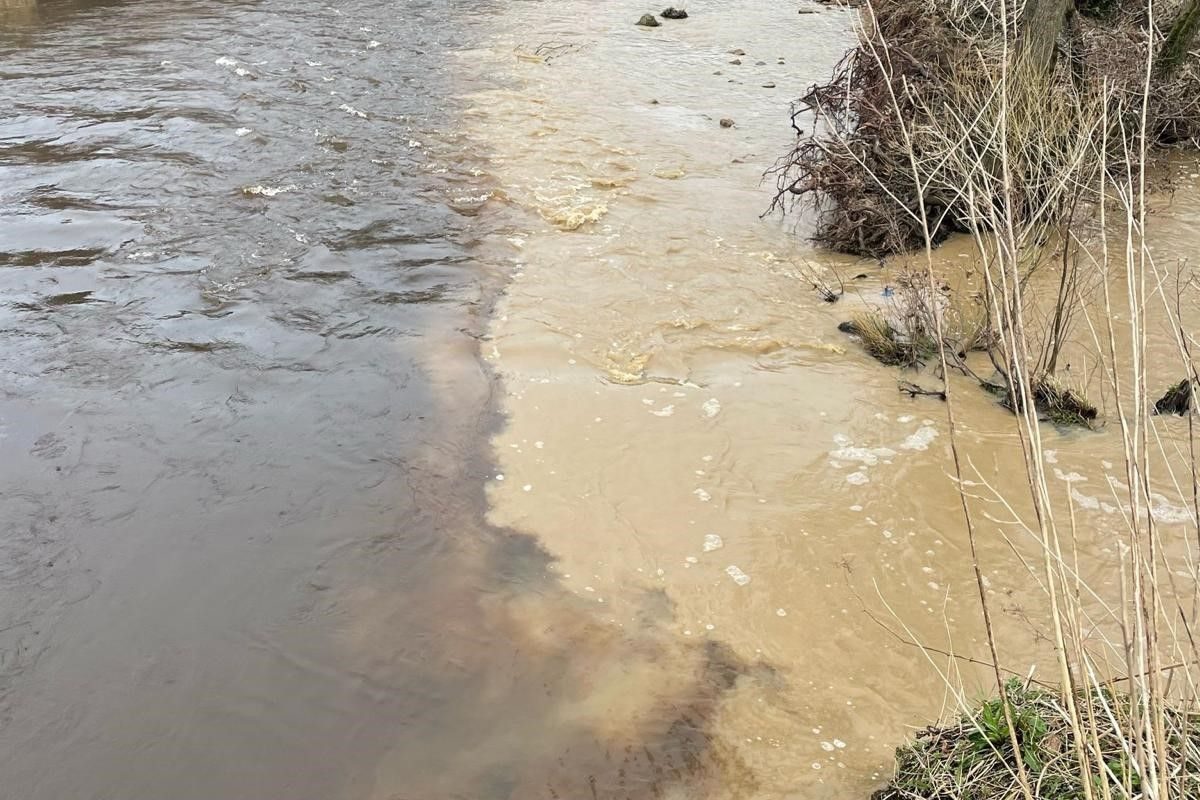
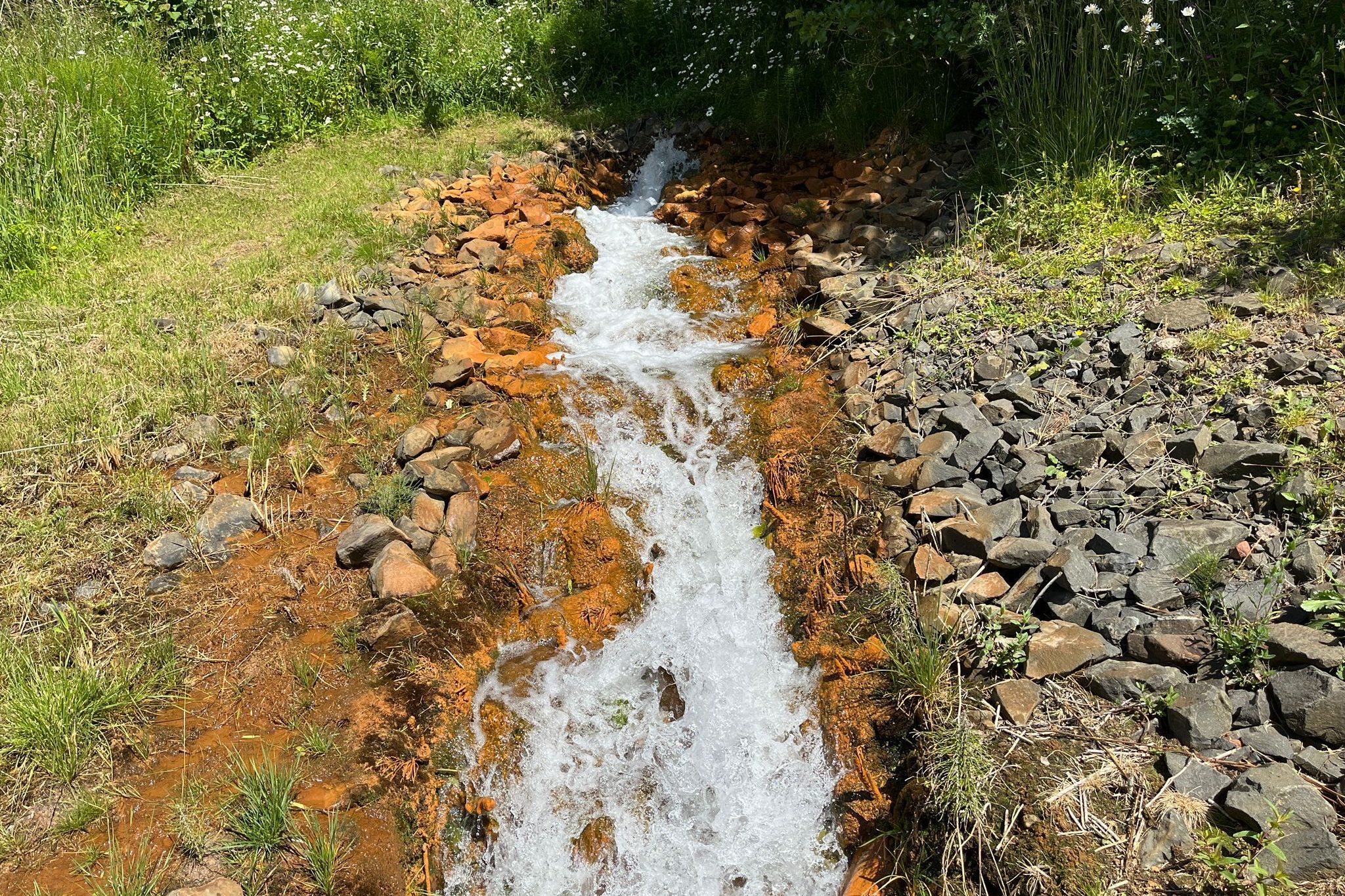
Of most concern in this region were the high phosphate, ammonia and oxygen readings around outflows from sewage treatment works at Longhorsley, Hampeth and Felton. There was also interest in the outflow from the old Whittle coal mine into the Hazon burn– the reed beds are well managed and seem to be returning good quality water to the river. This is not the case for the water flowing from the other Whittle mine outlet on the Tyelaw burn.
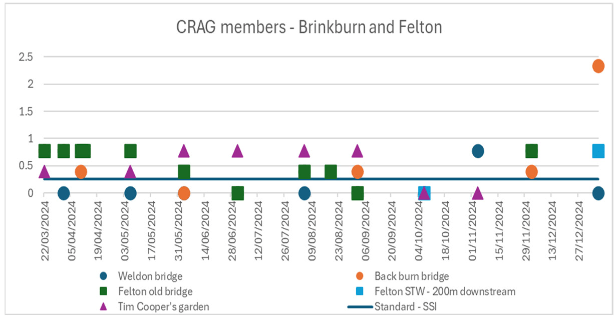
The Rothbury meeting was enhanced by the commencement of test results coming from upstream of Thropton – at Hepple, Sharperton, Alwinton and Barrow burn. There were occasional high phosphate readings in Upper Coquetdale, leading to a discussion as to whether this might be from animal sewage run-off or from poorly maintained septic tanks.

As for the Felton region, there were occasional poor results downstream of sewage treatment works. However of most concern were some of the phosphate and nitrate results on the Wreigh burn. There was a suggestion at the meeting that the poorer soils in this catchment may have led to greater leaching of agricultural fertilizers into the water.
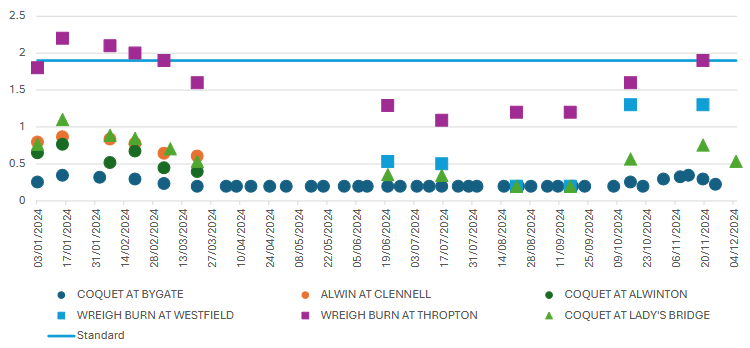
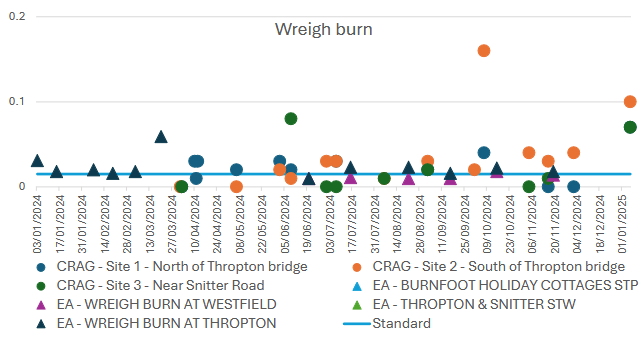
We learned a great deal from our investigation of the data; primarily that the river is generally in good health but that there are a few areas that we need to investigate further. We found that CRAG citizen science test results were largely in line with test results fromthe Environment Agency – giving us confidence that what we are doing will be meaningful to organisations that contribute to or manage water quality in the Coquet. We also demonstrated the benefit of communities coming together to support a cause dear to their hearts.
We know so much more about our river than we did a year ago.
 CRAG
CRAG 