Categories
Artistic response

The ‘story of the river’

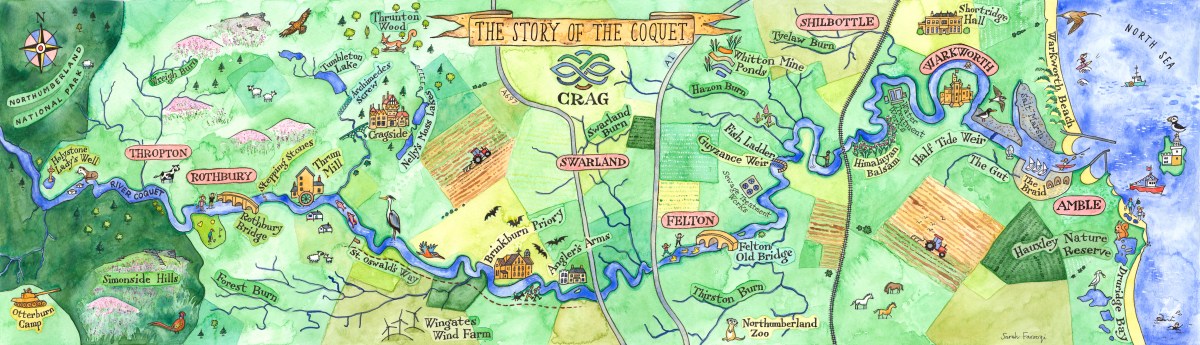
It was a fantastic opportunity and we grabbed it with both hands. A friend of CRAG offered to donate a painting by Felton-based artist Sarah Farooqi to tell the story of the River Coquet. The CRAG committee decided that this picture would become the flagstone image for CRAG. It would describe our view of how CRAG could support the Coquet and its catchment.
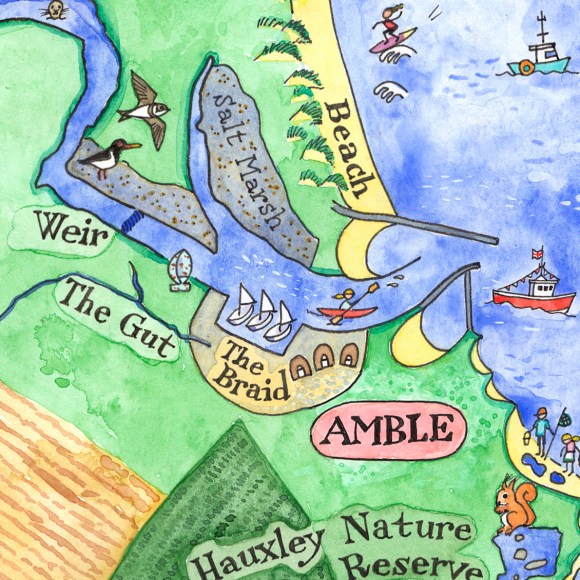
Not knowing what we were entering into, we met with Sarah to learn about what she could offer us. Instead, we spent most time describing to Sarah what we wanted from the painting. We wanted the map to show the users of the river – the farms, the tourists and the communities. It needed to illustrate what was good about the river – the woodlands, the animals and birds, the sand dunes and mudflats. And it needed to describe those features that can impact on the river – the weirs, the old mine sites, the sewage treatment works and the invasive weeds.

Sarah sent us home with homework. We needed to supply her with maps and photos, and we needed to refine our list of things that we wanted to see on the painting.
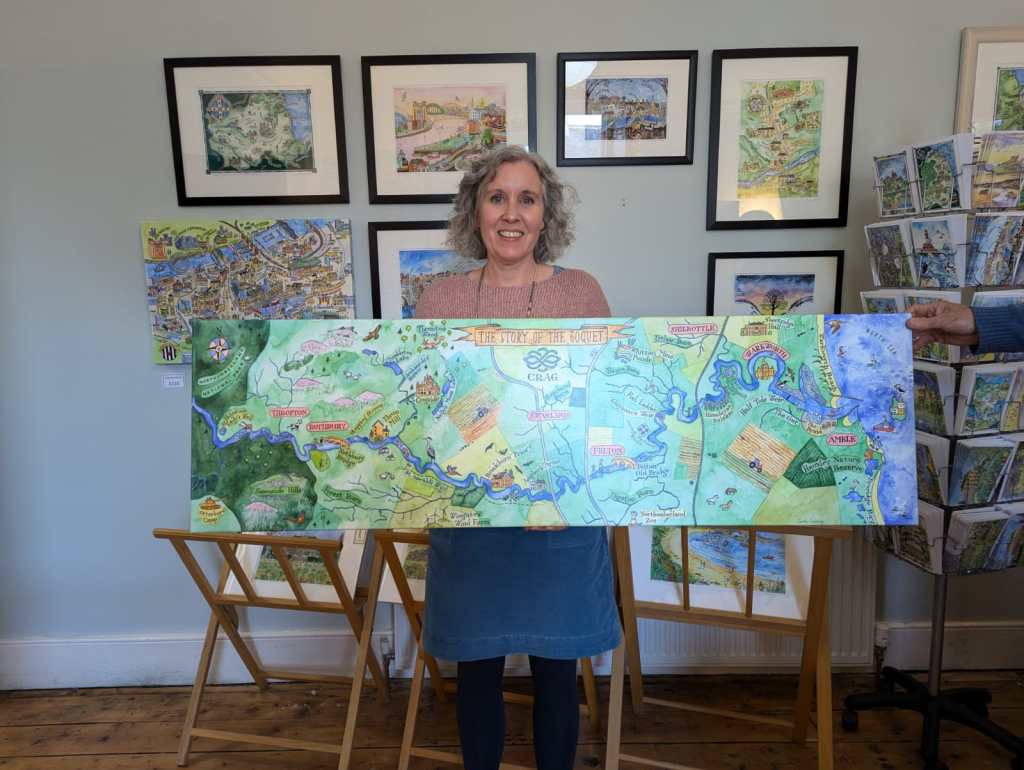
The committee were the lucky ones. We got to see the drafts as Sarah’s vision of our requirements came to life. First a pencil drawing, and we suggested changes. Then a second pencil drawing, and we made further changes. Then a pen drawing, and we made a final change or two. And finally, the finished painting (and no more changes).

We know that the painting is exceptional, and we know how lucky we are!

Sarah Farooqi, Artist/Illustrator, www.sarahfarooqi.co.uk

Categories
Uncategorized

CRAG at the Festival

Maddy, Julia and Jamie attended the Northumbrian Water Innovation Festival (https://www.innovationfestival.org/) at the Newcastle Racecourse in July 2024. Once we had worked out where to park, how to get into the venue and where the best pancakes were, we settled in.

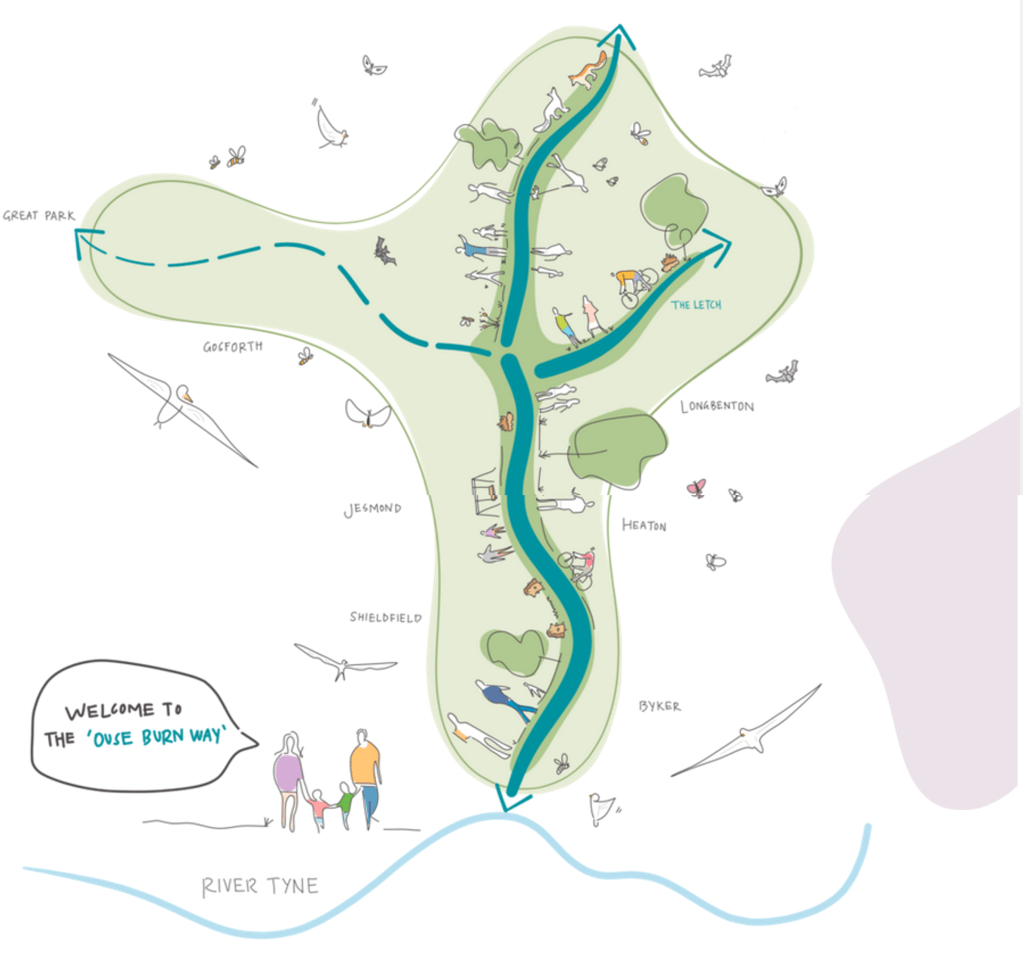
We joined the Ouseburn ‘sprint’ – a couple of days intense listening and discussion about the Ouseburn, a tributary of the Tyne. This burn, through Jesmond Dene and out to Great Park, has attracted a great deal of energy (and money) and is perhaps seen as the landmark catchment-approach project in the North East of England. The Reece Foundation has donated funds to develop the Ouseburn Way (https://www.theouseburnway.co.uk/) and the Tyne Rivers Trust has focussed energy to improving the quality of the water (https://www.tyneriverstrust.org/creating-a-better-ouseburn-for-everyone-to-enjoy/).

There were a wide range of speakers – housing developers, the Environment Agency, Northumbria Water, university researchers, Xylem amongst others.

There was much discussion about the CaSTCo approach (https://theriverstrust.org/our-work/our-projects/castco-catchment-systems-thinking-cooperative) and/or a catchment masterplan. This is a framework for bringing stakeholders together and sharing data and information to support evidence-based integrated catchment management. In our mind, this is where CRAG is heading (without perhaps the formal structure).

Many interesting initiatives were discussed, including:

  • Water Rangers – formal or informal volunteers who walk the river and report problems and improvements
  • SUDS (Stormwater Drainage Systems) – used to manage stormwater flows in housing developments, allowing water to soak into the soil naturally rather than flowing into the sewage system
  • Storyboards – Use of ArcGIS mapping software to describe changes (both good and bad) as a result of interactions with the river – the original ‘story of the river’!

After two days and lots of coffee we left for home feeling that CRAG was on the right track and that we now had many more ideas and contacts who could help us improve the Coquet.