Blogs and Latest News

  • Coquet river action group makes a splash

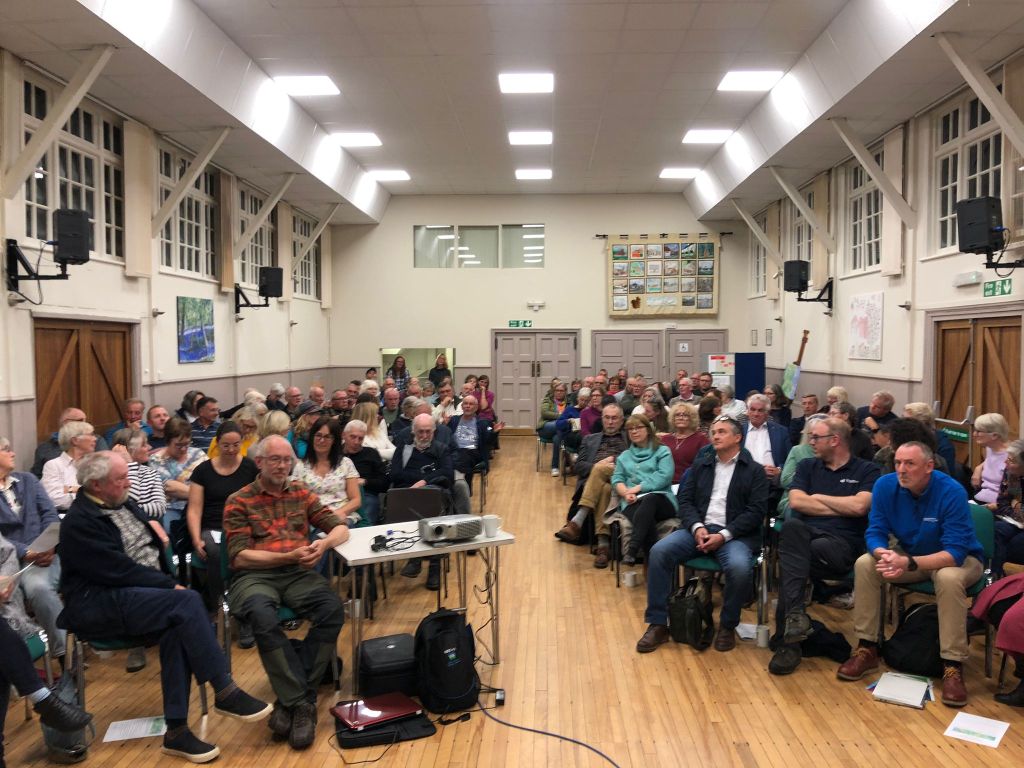
    More than a hundred people attended the launch of the Coquet River Action Group (CRAG) at Swarland Village Hall this week

    A large turnout reinforced what an important issue this is to many people and the wide range of interests in the river and its biodiversity.  CRAG is bringing together many groups including parish councils, Women’s Institutes and environmental action groups as well as the Northumberland Rivers Trust.  Volunteers from all these groups are carrying out citizen science water quality testing along the River Coquet.

    Chair of CRAG, Jane Davis, explained that the aim is to collect scientifically relevant data that can be used to collaborate with other organisations to form a ‘catchment community’ working to improve the river and its habitats.
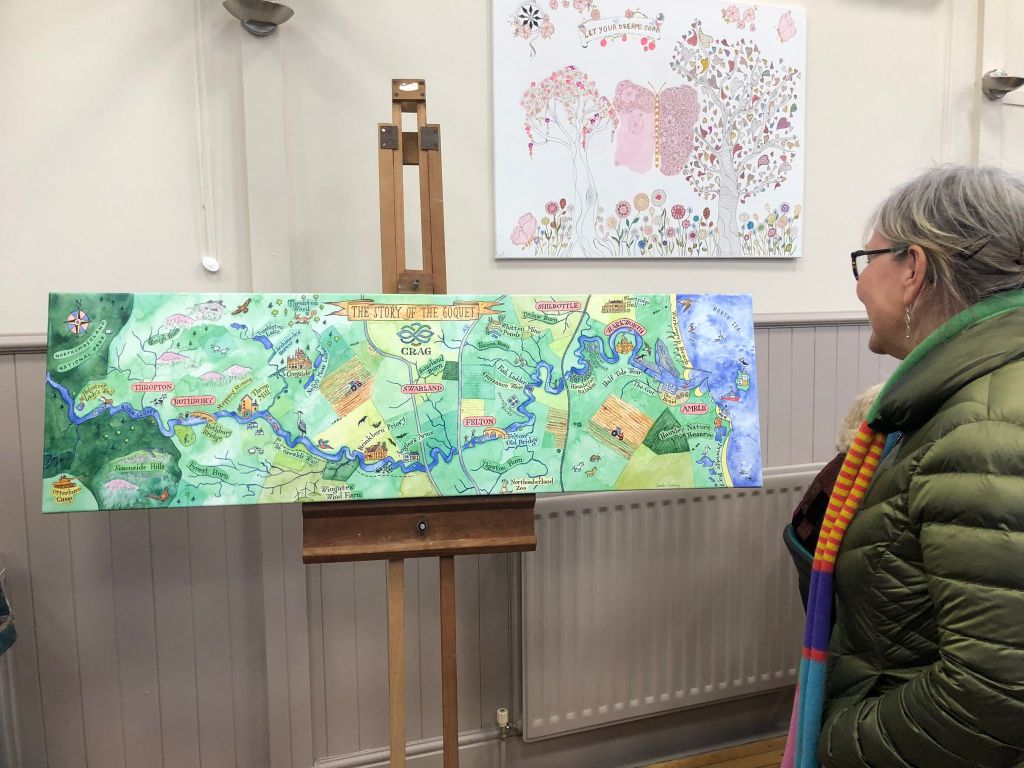
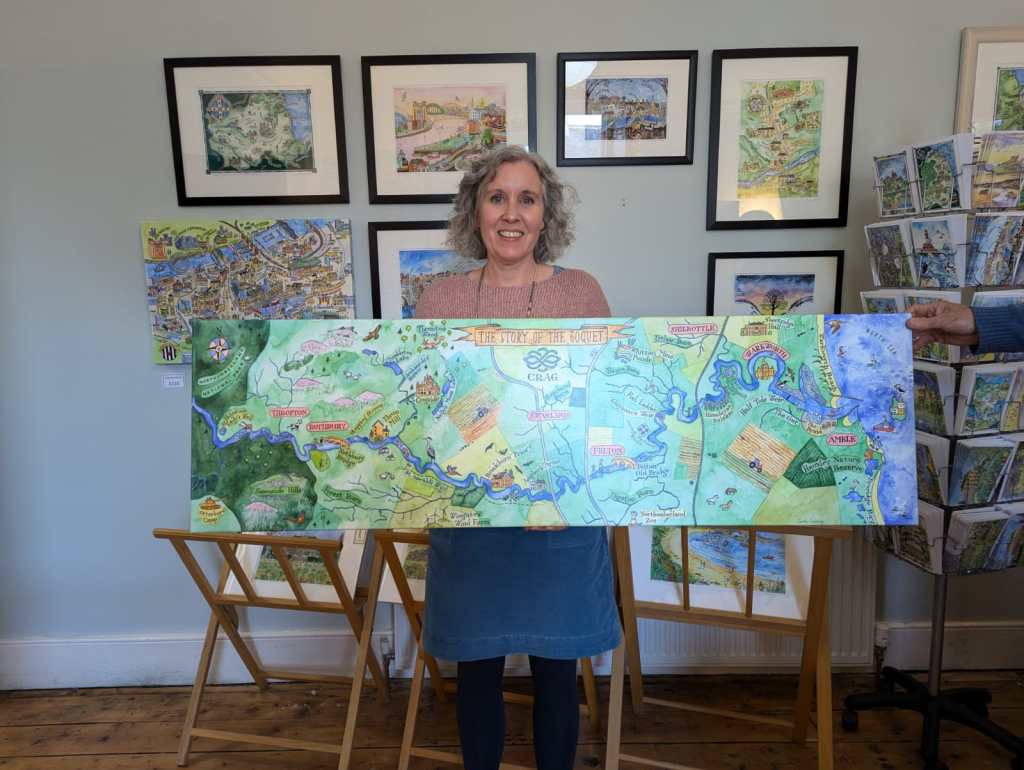
    On display was the fabulous ‘Story of the Coquet’ picture created for CRAG by local Felton artist Sarah Farooqi and funded by a very generous donor which attracted a lot of attention.
    Steve Lowe, from the Northumberland Rivers Trust, told the audience that although the Coquet is a SSSI there are still many issues including invasive species, mine water legacy and farming-related run-off.

    Graham Holyoak from Northumberland Wildlife Trust talked about plans for the Druridge Bay area, focussing on a number of key species including water voles. Steve Robson and Laura Molon from Northumbrian Water provided an overview of the multi-million-pound investment plans to reduce sewage overflows and improve sewage treatment works. Lastly, Mark Middleton from National Landscapes talked about a variety of projects taking place around the Amble and Warkworth.

    An enthusiastic question and answer session included discussion about extending the project into the upper Coquet, how to obtain Designated Bathing Water status, issues related to mine water pollution and ‘forever chemicals’, the types of monitoring carried out by Northumbrian Water and how to get young people involved in the project.

    Finally, Jane invited anyone who is interested in getting involved to email CRAG at coquetriveractiongroup.outlook.com or to visit the website:https://coquetriveractiongroup.org for more information.
  • The ‘story of the river’

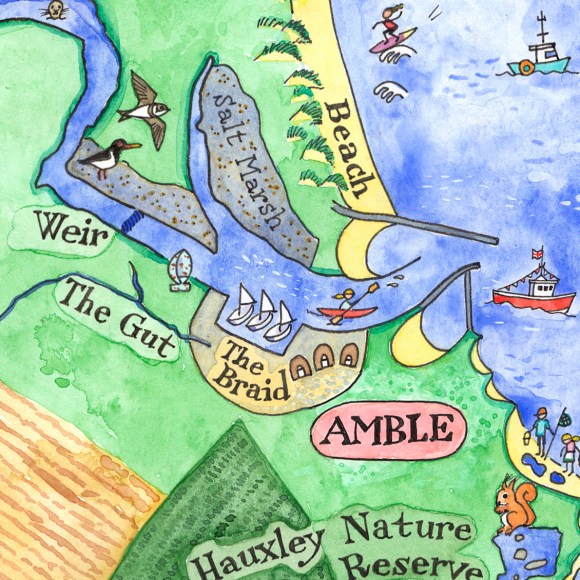
    It was a fantastic opportunity and we grabbed it with both hands. A friend of CRAG offered to donate a painting by Felton-based artist Sarah Farooqi to tell the story of the River Coquet. The CRAG committee decided that this picture would become the flagstone image for CRAG. It would describe our view of how CRAG could support the Coquet and its catchment.

    Not knowing what we were entering into, we met with Sarah to learn about what she could offer us. Instead, we spent most time describing to Sarah what we wanted from the painting. We wanted the map to show the users of the river – the farms, the tourists and the communities. It needed to illustrate what was good about the river – the woodlands, the animals and birds, the sand dunes and mudflats. And it needed to describe those features that can impact on the river – the weirs, the old mine sites, the sewage treatment works and the invasive weeds.

    Sarah sent us home with homework. We needed to supply her with maps and photos, and we needed to refine our list of things that we wanted to see on the painting.

    The committee were the lucky ones. We got to see the drafts as Sarah’s vision of our requirements came to life. First a pencil drawing, and we suggested changes. Then a second pencil drawing, and we made further changes. Then a pen drawing, and we made a final change or two. And finally, the finished painting (and no more changes).

    We know that the painting is exceptional, and we know how lucky we are!

    Sarah Farooqi, Artist/Illustrator, www.sarahfarooqi.co.uk

  • CRAG at the Festival

    Maddy, Julia and Jamie attended the Northumbrian Water Innovation Festival (https://www.innovationfestival.org/) at the Newcastle Racecourse in July 2024. Once we had worked out where to park, how to get into the venue and where the best pancakes were, we settled in.

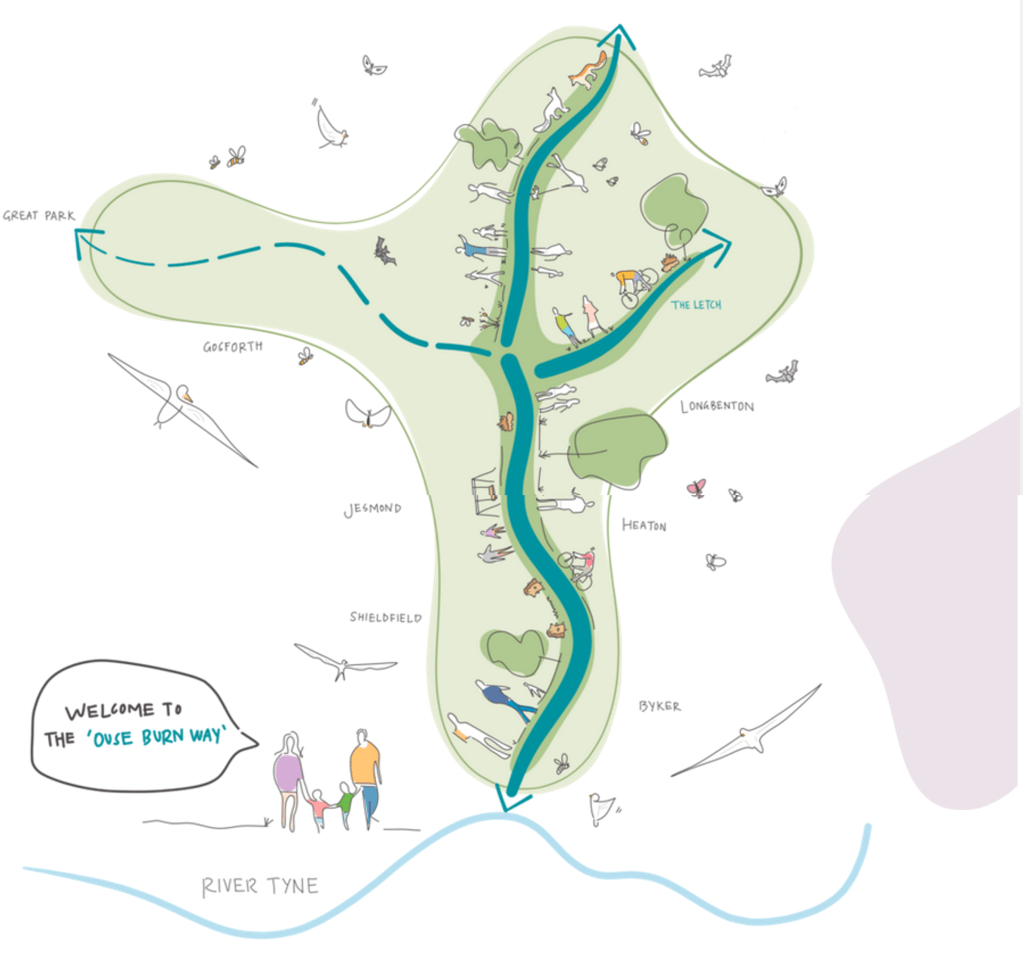
    We joined the Ouseburn ‘sprint’ – a couple of days intense listening and discussion about the Ouseburn, a tributary of the Tyne. This burn, through Jesmond Dene and out to Great Park, has attracted a great deal of energy (and money) and is perhaps seen as the landmark catchment-approach project in the North East of England. The Reece Foundation has donated funds to develop the Ouseburn Way (https://www.theouseburnway.co.uk/) and the Tyne Rivers Trust has focussed energy to improving the quality of the water (https://www.tyneriverstrust.org/creating-a-better-ouseburn-for-everyone-to-enjoy/).

    There were a wide range of speakers – housing developers, the Environment Agency, Northumbria Water, university researchers, Xylem amongst others.

    There was much discussion about the CaSTCo approach (https://theriverstrust.org/our-work/our-projects/castco-catchment-systems-thinking-cooperative) and/or a catchment masterplan. This is a framework for bringing stakeholders together and sharing data and information to support evidence-based integrated catchment management. In our mind, this is where CRAG is heading (without perhaps the formal structure).

    Many interesting initiatives were discussed, including:

    • Water Rangers – formal or informal volunteers who walk the river and report problems and improvements
    • SUDS (Stormwater Drainage Systems) – used to manage stormwater flows in housing developments, allowing water to soak into the soil naturally rather than flowing into the sewage system
    • Storyboards – Use of ArcGIS mapping software to describe changes (both good and bad) as a result of interactions with the river – the original ‘story of the river’!

    After two days and lots of coffee we left for home feeling that CRAG was on the right track and that we now had many more ideas and contacts who could help us improve the Coquet.