
What We’re Doing
CRAG encourages members of our organisations to contribute to the maintenance and improvement of the water quality, health and biodiversity of the River Coquet and its catchment.
Currently much of our effort is aimed at gathering information about the river and making contact with other groups who have an interest in the river. We will use the knowledge that we gather to encourage other organisations to make changes.
Many of our member groups are engaged with a wider environmental agenda than just the River Coquet. Relevant here are their actions to enhance biodiversity within the River Coquet catchment. For example, tree planting in the valley of the Hazon Burn is a positive example of action to increase biodiversity, to mitigate impacts of flooding, soil erosion and storm impact related to climate change and to link woodland corridors along tributaries of the Coquet to the main river woodlands.
Water Quality Testing – Physical and Chemical Tests
By understanding the pollution cycle and with reference to the Water Framework Directive, we have selected physical and chemical test that help us monitor the health of the river.
To find out more about the pollution cycle and the tests we selected follow the link above.
Water Quality Testing – Biological Surveys
Perhaps the best measures for the overall health of rivers are biological. If the number and composition of the fish and insects are changing, then this suggests that the health of the river is also changing.
To find out more about the biological surveys we conduct, in particular looking at river-fly ‘indicator’ species, follow the link above.
Our test locations:
Test locations for physical and chemical tests were selected on the understanding, where possible, that these locations would also be used for biological surveys. Locations were chosen by each local group using the following guidance:
- Sites would be safe for testing regardless of river level and environmental conditions
- Sites were placed where permission for access was available from landowners
- When testing point sources of pollution, sites would be paired, where possible, upstream and within 100 metres downstream of the pollution source
- Testing of burns would occur at least 10 metres upstream of where the burn joined the main river
Once selected, a risk assessment of the site was undertaken.
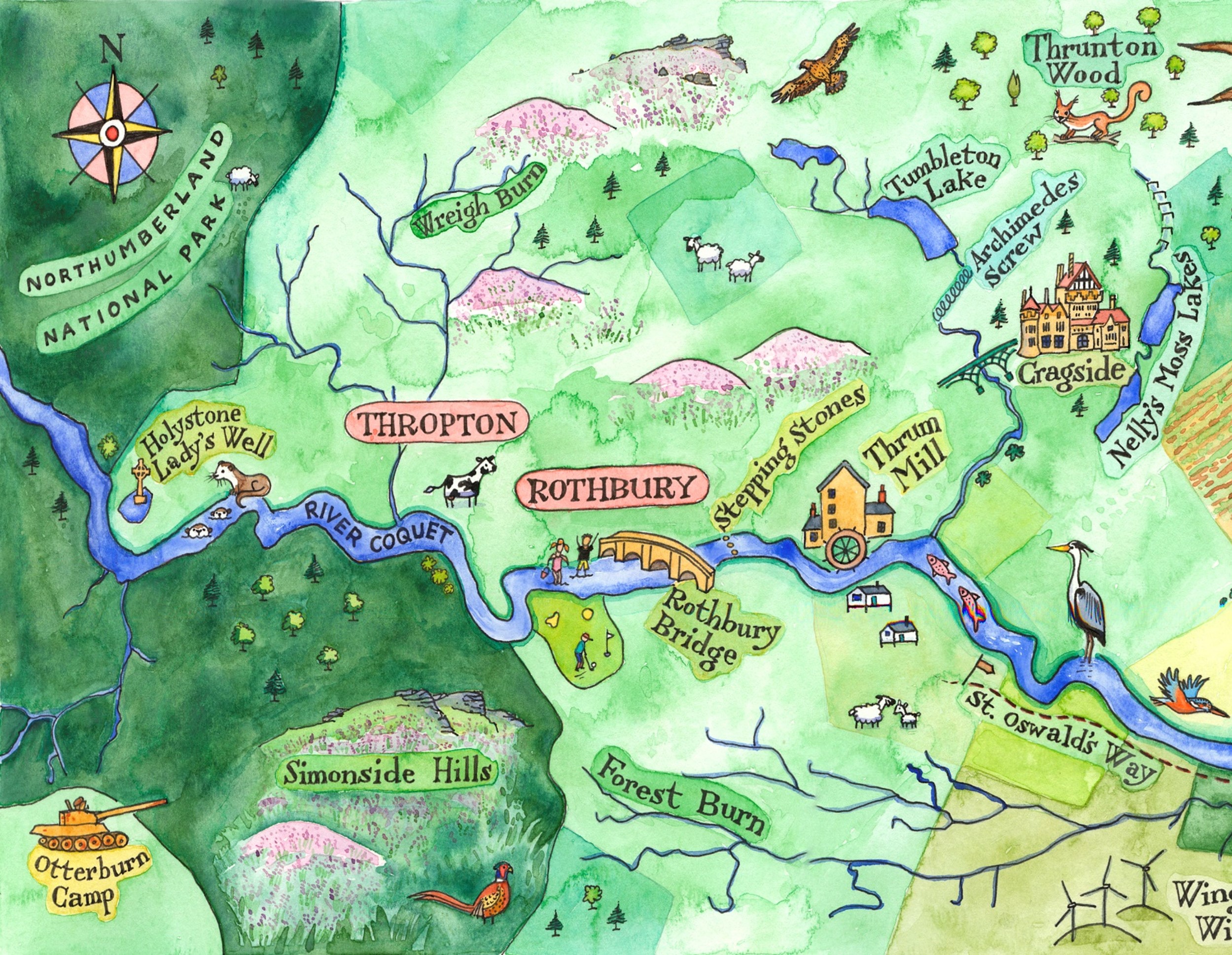
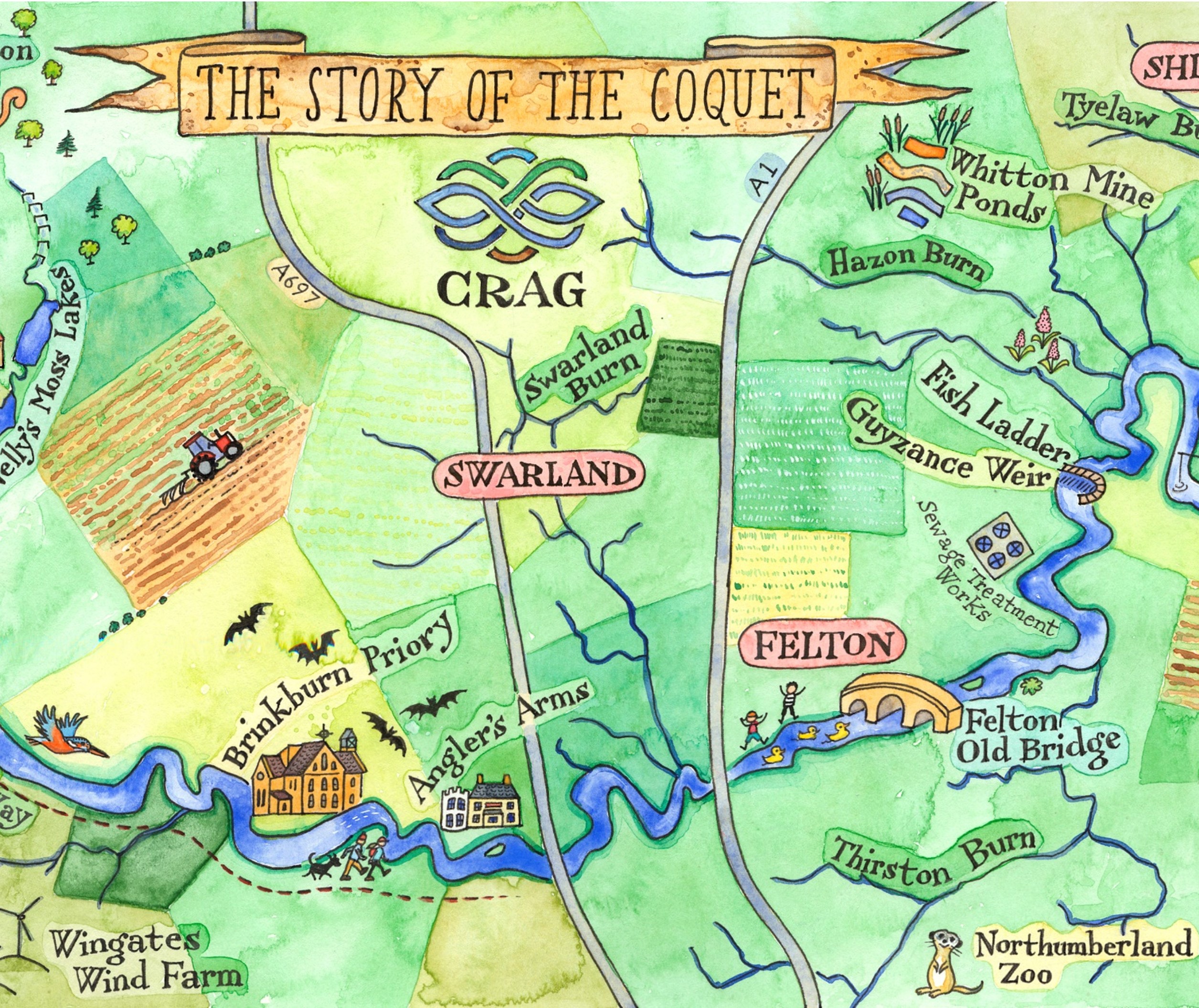
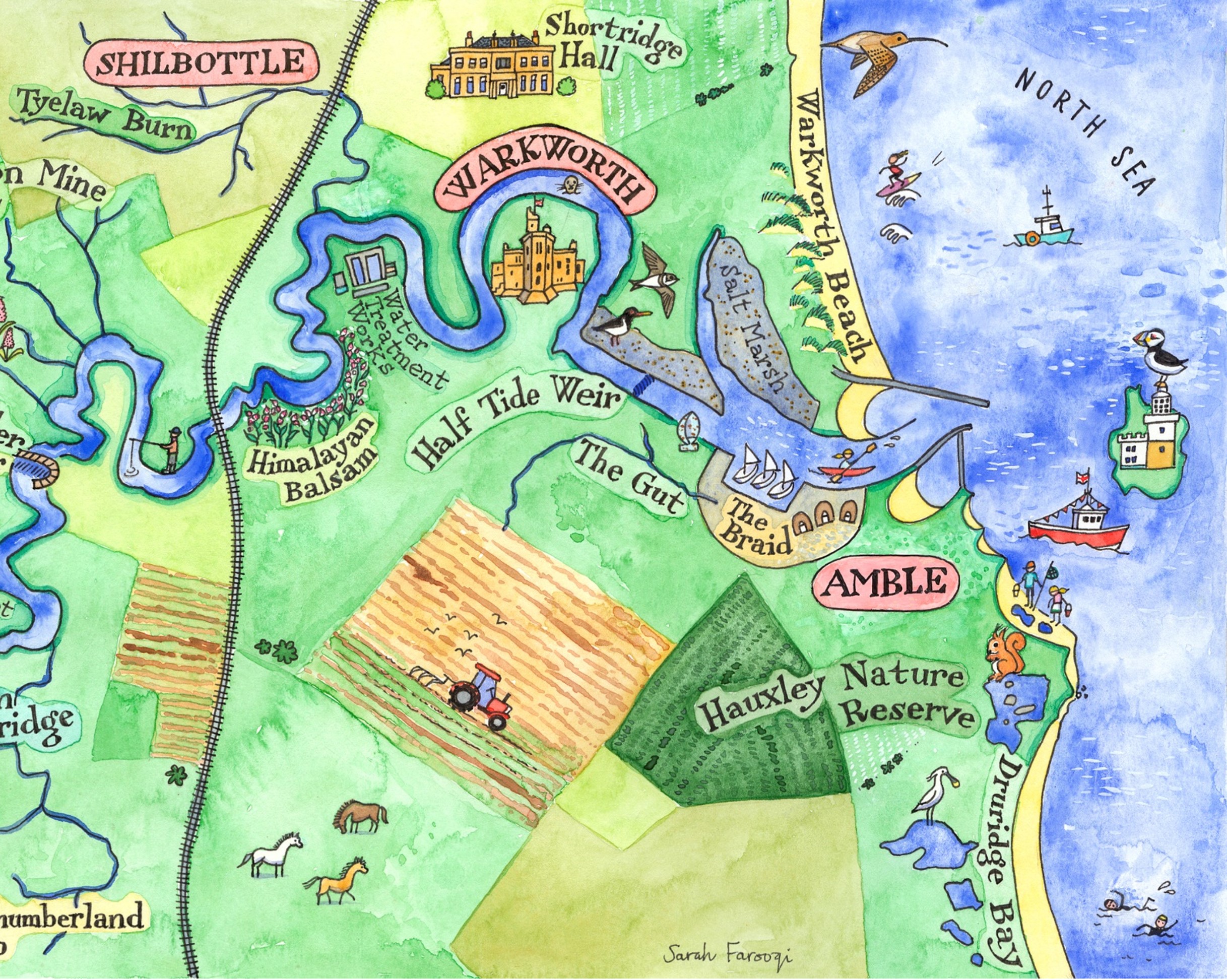
As of the end of 2024, we now are testing at 40 site on the River Coquet and tributaries. Check out the regions of the river below for more details.
Invasive Weeds
According to the WFD, a water body cannot be classified as high quality if any high-impact non-native species are present in the catchment. We have selected three species that are commonly found along Northumberland Rivers to focus on: Japanese knotweed, Himlayan balsam and giant hogweed.
You can read more about our effort to tackle these invasive species with the link above.